Overview
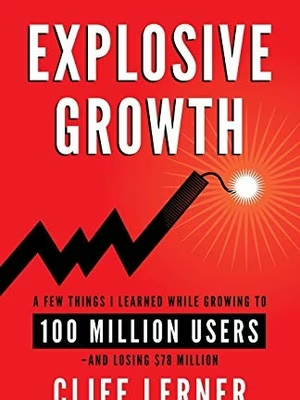
In Explosive Growth, Cliff Lerner tells the story of how he built one of the early viral dating apps on Facebook, grew it to over 100 million users, took his company public, and then watched it nearly collapse. This is not a typical "hero entrepreneur" story where everything works out perfectly. I like this book because Lerner is honest about his mistakes, including wasting millions on bad ads, ignoring user data, and hiring the wrong people.
The book focuses on the tactics and strategies that drove explosive user growth, especially through viral loops, A/B testing, and platform changes. Lerner shares specific numbers, conversion rates, and experiments so you can see exactly what worked and what flopped. Throughout this page, I'll connect his startup lessons to things you can try right now, whether you're launching a side project, growing a small business, or just curious about how viral products spread.
My Take: The "Growth Experiment Tracker"
Most business books focus on strategy and inspiration but skip the messy details of what actually worked. I wanted this summary to feel more like a "growth experiment tracker" that shows you the real tests Lerner ran, which ones paid off, and which ones burned cash. As you read, I'll highlight the experiments you can adapt to your own situation, even if you don't have a tech startup or millions of users.
I treat this book like a playbook for testing small, cheap growth ideas before betting big. When I read about Lerner's mistakes, I ask, "What would I have tested first to avoid that?" and "How could I run a smaller version of that experiment this week?" You can use this same approach to turn any growth tactic into a quick, low-risk test instead of a huge commitment.
Key Takeaways
Build Viral Loops Into Your Product
For me, the core lesson is that viral growth is not an accident. Lerner shows how he designed features that naturally encouraged users to invite their friends, like showing mutual connections and making it easy to share. Every time someone used the app, it created a chance for more people to discover it, which is how you grow without spending a fortune on ads.
Data Beats Opinions Every Time
Lerner talks a lot about how he ignored his own gut feelings and followed what the data actually showed. He shares examples where a feature he loved performed terribly, and a feature he hated became their biggest driver of growth. The lesson is simple: test everything, measure results, and let the numbers tell you what to do next.
Small Changes Can Have Massive Impact
One of my favorite parts is when Lerner explains how tiny tweaks like changing button colors, rewriting headlines, or adjusting email timing led to huge jumps in conversions. He shows that you don't always need a genius idea or a complete redesign. Sometimes the biggest wins come from obsessing over the small details most people ignore.
Platform Risk Is Real
Lerner built his entire business on Facebook's platform, and when Facebook changed its rules, his traffic dropped by over 80 percent almost overnight. The hard lesson here is that you don't really own your audience if you're building on someone else's platform. He wishes he had diversified earlier and built direct channels to his users, like email lists and mobile apps.
Speed and Iteration Win
The book hammers home the idea that moving fast and learning quickly beats trying to build the perfect product from day one. Lerner's team ran hundreds of experiments, and most of them failed, but the ones that worked more than made up for the losses. The key is to keep testing, keep shipping, and keep learning faster than your competitors.
Chapter-by-Chapter Summary (Short & Simple)
Part 1: The Early Days and First Breakthrough
Lerner starts by explaining how he stumbled into the dating app space and discovered Facebook's platform as a growth opportunity. He shares the moment when he realized that building on Facebook could give him instant access to millions of potential users without needing to drive traffic himself. This section taught me that sometimes the best opportunities come from riding a wave that's already moving, instead of trying to create one from scratch.
Part 2: Building Viral Loops
Here, Lerner digs into the mechanics of viral growth and how he designed features that naturally spread. He explains concepts like K-factor, which measures how many new users each existing user brings in, and shows how small improvements in that number can lead to exponential growth. I like this part because it breaks down viral growth from a vague buzzword into specific, measurable tactics.
Part 3: The Power of A/B Testing
This section is all about experimentation and how Lerner's team tested everything from button colors to email subject lines. He shares specific examples where a simple headline change increased sign-ups by 30 percent or where moving a button led to double-digit conversion gains. The big lesson for me is that testing is not optional, it's the only way to really know what works.
Part 4: Scaling and Growing to 100 Million Users
Lerner walks through the wild ride of going from a small team to managing a product with over 100 million users. He talks about the operational challenges, the hiring mistakes, and the pressure of being a public company. This chapter reminded me that fast growth creates new problems you can't predict, and that building systems and processes becomes just as important as building the product itself.
Part 5: When Facebook Changed the Rules
This is where things get tough. Facebook changed its policies, cutting off many of the viral channels Lerner relied on, and his traffic plummeted. He explains how he scrambled to adapt, tried different strategies, and ultimately had to rethink the entire business model. I found this part valuable because it shows the downside of platform dependence and why you need backup plans when you're building on someone else's infrastructure.
Part 6: Expensive Mistakes and Hard Lessons
Lerner gets brutally honest about the mistakes that cost him millions, including bad acquisitions, wasted ad spend, and hiring the wrong executives. He shares stories of deals that looked great on paper but destroyed value in reality. This chapter is a reminder that every entrepreneur makes expensive mistakes, and the key is to learn from them quickly and adjust before they sink the company.
Part 7: Recovery and What He'd Do Differently
In the final section, Lerner reflects on what he learned and what he would do differently if he could start over. He talks about the importance of focusing on retention over acquisition, building direct relationships with users, and not getting too comfortable when things are going well. I appreciate this part because it turns a cautionary tale into a practical guide for anyone trying to build something that lasts.
Main Concepts
Viral Loops and K-Factor
One of the most important ideas in the book is the concept of a viral loop, which is when using your product naturally leads people to invite others. Lerner explains that if each user brings in more than one new user, you have viral growth. The K-factor measures this: if your K-factor is 1.5, every user brings in 1.5 new users, and your growth becomes exponential over time.
The A/B Testing Mindset
Lerner shows how his team treated almost everything as an experiment. They would create two versions of a page, split traffic between them, and see which one performed better. He shares examples where small changes, like a different color button or a shorter form, led to big improvements. The key is to test one thing at a time so you know what actually caused the change.
Platform Risk
A huge part of the book deals with the danger of building your business on someone else's platform. When Facebook changed its policies, Lerner lost most of his traffic overnight because he didn't control the distribution channel. He learned that you need to own your relationship with your users through email lists, mobile apps, and other direct channels, so you're not at the mercy of platform changes.
Focus on Retention, Not Just Acquisition
Lerner admits that he spent too much time obsessing over getting new users and not enough time making sure those users stuck around. He learned that retention is often more valuable than acquisition because engaged users are the ones who invite friends, pay for premium features, and create long-term value. If your churn rate is too high, no amount of new users will save you.
How to Apply the Ideas This Week
I don't want you to just read about Lerner's experiments and move on. Here are a few small, practical ways you can use his growth tactics in your own projects this week, even if you're not running a tech startup.
- Find one place to add a viral loop. Look at your product, service, or content and ask, "How could using this naturally lead someone to share it with others?" It could be as simple as adding a "Share with a friend" button or offering a small bonus for referrals.
- Run one tiny A/B test. Pick one element of your website, email, or landing page and create two versions. Test a headline, a button color, or the order of your content. Use the data to decide which version to keep.
- Measure your retention. If you have customers or users, track how many come back after their first visit or purchase. If your retention is low, focus on improving the experience before you spend more money on acquisition.
- Reduce platform dependence. If you rely heavily on social media, Google, or any third-party platform, start building a direct channel this week. Add an email sign-up form, create a newsletter, or build a simple app so you can reach your audience directly.
- Track one growth metric. Choose one number to obsess over this week, like conversion rate, referral rate, or daily active users. Write it down every day and brainstorm one small experiment to improve it.
Memorable Quotes
"Data trumps opinions."
"If you want explosive growth, you need to build it into the product from day one."
"Test everything. Measure everything. Let the numbers guide you."
"Building on someone else's platform is like building a house on rented land."
Who I Think Should Read This Book
- Startup founders and entrepreneurs: If you're building a product and trying to figure out how to grow fast without spending a fortune, Lerner's playbook is full of specific tactics you can steal.
- Growth marketers and product managers: If your job is to drive user acquisition and retention, this book gives you a behind-the-scenes look at viral loops, A/B testing, and platform strategy.
- Small business owners: Even if you're not in tech, the principles of testing, measuring, and creating referral mechanisms apply to any business trying to grow efficiently.
- Anyone building on a platform: If you rely on Facebook, Instagram, YouTube, Google, or any third-party platform for traffic, the chapters on platform risk will be eye-opening and possibly save you from a painful surprise.
- People who want to learn from mistakes: If you appreciate honest, unfiltered lessons from someone who made expensive errors and lived to tell about it, you'll find Lerner's candor refreshing.
What Other Readers Are Saying
I always check what other readers think before committing to a business book. On Goodreads, Explosive Growth holds around 4.2 out of 5 stars from several hundred ratings. Many readers appreciate Lerner's honesty about his failures and the specific, actionable tactics he shares. Some mention that parts feel repetitive or that the advice is most useful for tech startups, but most agree the lessons are valuable.
On Amazon, the book has around 4.4 out of 5 stars with hundreds of reviews. Readers frequently call it "practical," "honest," and "full of real-world examples." Several reviewers mention that they took notes and immediately applied the A/B testing and viral loop concepts to their own businesses. A few critics note that if you're not in a digital business, some chapters may feel less relevant, but even those readers say the core principles still apply.
-
Read reviews on Amazon:
Explosive Growth on Amazon
* Affiliate link. I earn from qualifying purchases.
- Read reviews on Goodreads: Explosive Growth on Goodreads
Final Thoughts
For me, the biggest gift of Explosive Growth is that it demystifies viral growth and turns it into something you can actually plan for and engineer. Instead of hoping your product magically takes off, you can design growth into the experience from the start and test your way to what works. That shift from hoping to testing is what separates businesses that grow predictably from ones that stall.
If you use this summary as a growth experiment tracker, you'll walk away with more than just theory. You'll have a list of small tests you can run this week to see if viral loops, A/B testing, or retention improvements can move the needle for your business. That's the heart of Lerner's message: don't guess, test, and let the data tell you where to go next.

Ready to Test Your Way to Growth?
If this summary helped you, the full book is worth reading with a notebook handy so you can write down the experiments you want to try. You can use it as a practical guide to test, measure, and grow faster than your competition.
Get Explosive Growth on Amazon* Affiliate link. I earn from qualifying purchases.