Overview
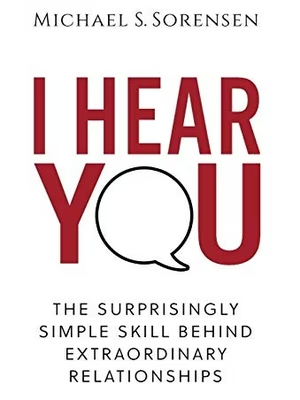
I Hear You is a short, very practical book about how to make people feel seen, safe, and understood. Sorensen argues that the biggest missing piece in most conversations is not advice or solutions, but validation, naming and honoring someone’s emotion without trying to fix it right away.
The book explains what validation is, why it matters so much to our brains and relationships, and how to use a simple four-step method in everyday life. You’ll see how validation can calm tense arguments, make feedback easier to hear, deepen intimacy, and even help you talk more kindly to yourself. My goal in this summary is to give you the key ideas and show you how to start practicing them in small, doable ways.
My Take: The 4-Step Validation Loop
Most people talk about I Hear You as “that validation book.” I think of it as a blueprint for a simple 4-step validation loop I can run in any tough conversation. The loop is: 1) listen fully, 2) put their emotion into words, 3) offer help or encouragement if they want it, and 4) circle back and validate again.
I use this loop like a mental checklist whenever someone around me is stressed, angry, or worried. Instead of jumping straight into fixes, I quietly ask myself: Did I really listen? Did I name what they’re feeling? Did I offer support without pushing it? Did I close the loop by reminding them they’re not crazy for feeling this way? Throughout this page, I’ll keep coming back to that validation loop so you can see how it looks in real, messy, everyday conversations.
Key Takeaways
Validation Is Not the Same as Agreement
One of the most helpful ideas for me is that validation does not mean you agree with someone. You can think they’re wrong about the facts and still say, “Given what you thought was happening, it makes sense you felt that way.” That simple move lowers defenses and opens the door for a calmer, more honest conversation.
The Four-Step Validation Method
Sorensen breaks validation into a four-step method: listen empathically, validate the emotion, offer advice or encouragement, then validate again. Each step is clear and simple, but together they create a powerful “arc” for a conversation. I like that the method is concrete enough that I can replay a talk in my head and see exactly where I skipped a step.
Validation Calms Emotions and Builds Trust
When people feel judged, corrected, or brushed off, their emotions usually rise. When they feel understood, those same emotions tend to soften. The book shows how being heard can be calming all by itself, even before anything changes on the outside. That’s why good validation can turn a heated argument into a problem-solving session surprisingly fast.
You Can Validate Others and Yourself
Sorensen also talks about self-validation, learning to notice and name your own emotions without beating yourself up. Instead of saying “I shouldn’t feel this way,” you might say, “Of course I feel anxious; this is a big change.” When I practice self-validation, I’m less reactive with other people and more grounded when conversations get difficult.
Chapter-by-Chapter Summary (Short & Simple)
Chapter 1: Why This Is Worth Your Time
The opening chapter explains why validation is such a big deal. Sorensen shares how he first learned the skill in therapy and noticed it instantly changing his relationships. He argues that making one small change in how we respond to people, especially when they’re upset, can improve almost every relationship in our lives.
Chapter 2: Validation 101
Here he defines validation in simple language and contrasts it with invalidating responses like “You’re overreacting” or “It’s not a big deal.” Validation, as he describes it, means recognizing a specific emotion and giving a believable reason why that emotion makes sense. This chapter lays the foundation for the rest of the book and shows how even small validating phrases can make a big difference.
Chapter 3: Common Misconceptions
Many people worry that validation will encourage bad behavior, make them look weak, or mean they are giving in. Sorensen walks through these misconceptions one by one and shows why they’re false. You can validate someone’s feelings and still keep your boundaries, disagree with their choices, or hold them accountable for their actions.
Chapter 4: It All Starts With Empathy
Before you can validate someone, you have to understand what they’re feeling. This chapter focuses on empathy, getting curious about the other person’s inner world instead of rushing to defend your own. Sorensen offers practical tips for asking better questions, imagining their point of view, and giving your full attention in a distracted world.
Step 1: Listen Empathically
The first step in the method is to listen with your whole attention. That means putting your phone down, not interrupting, and resisting the urge to mentally prepare your response. The goal is to understand the story and the emotion underneath it, so the other person feels like you are really there with them.
Step 2: Validate the Emotion
The second step is where the magic happens: you name what they’re feeling and why it makes sense. Sorensen shows examples of simple phrases like “That sounds really frustrating” or “Of course you’re nervous; this matters a lot to you.” When done well, this step helps people feel normal instead of broken for feeling how they feel.
Step 3: Offer Advice or Encouragement
Only after validating do you move to advice or encouragement. Sorensen suggests asking permission first, “Would it help if I shared a thought?”, instead of launching into a lecture. When someone feels understood, they are far more open to hearing ideas, feedback, or a different point of view.
Step 4: Validate Again
The final step is to circle back and validate one more time. This might sound like, “Whatever you decide, it makes sense that this feels heavy,” or “I know this is a lot to carry.” That last bit of validation reassures the person that your advice didn’t erase your understanding or care.
Real-World Situations
In the later section on real-world situations, Sorensen applies the four steps to common scenarios: parenting, romantic conflict, workplace stress, and supporting friends. Seeing the method play out in different contexts makes it easier to imagine using it in your own life, even when emotions are high and time is short.
Final Thoughts & Afterword
The book closes with a reminder that validation is a skill, not a personality trait. You don’t have to be naturally “good with people” to improve; you just need to practice. Sorensen encourages readers to start small, be patient with mistakes, and notice how often people light up when they finally feel heard.
Main Concepts
What Validation Really Is
In this book, validation has two main elements: it acknowledges a specific emotion and gives a believable reason why that emotion makes sense in the situation. That’s different from saying someone is right about every detail. You’re simply saying, “Given what you experienced or believed, it’s understandable that you feel this way.”
The Four-Step Validation Method
The four-step validation method is the heart of the book. You listen empathically, validate the emotion, offer advice or encouragement, and validate again at the end. Sorensen shows how this structure keeps conversations from turning into debates or rescue missions, and instead turns them into moments of connection and support.
Validation Before Solutions
One big mindset shift for me is “validation before solutions.” When someone vents, it’s tempting to jump straight to fixes, but that often leaves them feeling invisible or talked over. If I slow down and validate first, solutions land better, and sometimes, they don’t even need a solution anymore, just to feel heard.
Self-Validation and Boundaries
Sorensen also highlights the power of self-validation. Instead of judging your own emotions, you learn to notice them and give yourself the same understanding you’d give a friend. This makes it easier to set healthy boundaries, say “no” when you need to, and stay calm when others around you are upset.
How to Apply the Ideas This Week
I don’t want this summary to be something you read and forget. Here’s a simple seven-day plan I use to practice the validation loop from I Hear You in real life.
- Day 1 – Notice venting moments. Today, just pay attention to when people around you start venting or complaining. Instead of fixing, remind yourself: “This is a chance to practice validation.”
- Day 2 – Ask what they need. When someone shares something hard, gently ask, “Do you want advice, or do you just want me to listen?” This alone can make people feel respected.
- Day 3 – Name the emotion. In one conversation, try to name what the other person is feeling: “That sounds scary,” or “I can see why you’d be frustrated.” Keep it short and honest.
- Day 4 – Add the “makes sense” piece. Go a step further by giving a simple reason: “Of course you’re stressed; there’s a lot riding on this.” This is the core of good validation.
- Day 5 – Run the full loop once. Pick one conversation and walk through all four steps: listen, validate, offer help if they want it, then validate again before you wrap up.
- Day 6 – Practice self-validation. When you feel overwhelmed, name your own emotion and why it makes sense. For example: “I feel anxious because this deadline is close and I care about doing well.”
- Day 7 – Reflect on the changes. At the end of the week, think about one conversation that felt different because you validated. Notice how it affected trust, tension, and your own stress level.
Memorable Quotes
“Validation has two main elements.”
“Good listeners do more than just listen, they validate.”
I also love the idea that when I validate myself, I quiet my inner critic and make it easier to be kind to others.
Who I Think Should Read This Book
- Couples and romantic partners: If you and your partner repeat the same arguments, this book gives you a shared language for slowing down, validating, and then solving problems together.
- Parents and caregivers: Validation is huge for kids and teens who often feel misunderstood or judged. These tools can help you connect, even when you still need to hold firm boundaries.
- Managers and team leaders: If you lead people, learning to validate before you correct or coach can make feedback conversations calmer and more productive.
- Helpers, coaches, and therapists-in-training: Anyone who listens to others for a living can use this book as a quick refresher on empathy, presence, and validation.
- Anyone who feels unseen or unheard: If you often feel ignored or “too much,” this book can help you understand what you’ve been missing and give you words to ask for the validation you need.
What Other Readers Are Saying
I always like to see what other readers think before I commit to a book. On Goodreads, I Hear You sits at around 4.17 out of 5 stars from more than ten thousand ratings, which is very strong for a short relationship book. Readers often describe it as clear, concise, and surprisingly powerful for such a quick read.
On Amazon, the book holds an average rating of about 4.6 out of 5 stars, with many reviews calling it “simple but life-changing” and praising how practical the examples feel. Some people say it’s a great starting point if you’ve never learned about validation, while a smaller group wishes it went deeper or included more advanced strategies. Overall, the most common feedback is that the four-step method is easy to remember and immediately useful in real conversations.
-
Read reviews on Amazon:
I Hear You: The Surprisingly Simple Skill Behind Extraordinary Relationships on Amazon
* Affiliate link. I earn from qualifying purchases.
- Read reviews on Goodreads: I Hear You on Goodreads
Final Thoughts
For me, the biggest gift of I Hear You is how it changes the question I ask in hard conversations. Instead of “What should I say to fix this?” I now ask, “How can I show this person I really get what they’re feeling first?” When I remember to run the 4-step validation loop, the whole tone of the conversation shifts, there’s less defensiveness, more honesty, and more warmth on both sides.
If you treat this summary as the start of a practice, not just a recap, this little book can have a big impact. Try aiming for just one full validation loop per day, with a partner, a child, a co-worker, or even yourself. Over time, those small moments of “I hear you” can add up to stronger, calmer, and more connected relationships across your whole life.

Ready to Practice Better Validation?
If this summary helped you, the full book is worth reading slowly, with your real relationships in mind. You can use I Hear You as a pocket guide to the four-step validation method and come back to it whenever you feel stuck or misunderstood.
Get I Hear You on Amazon* Affiliate link. I earn from qualifying purchases.