Overview
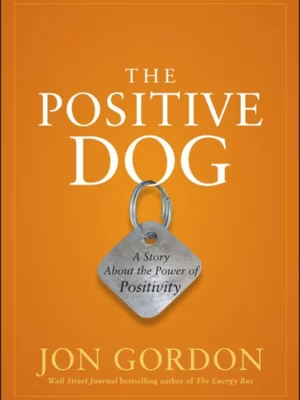
The Positive Dog is a short fable about a downcast shelter dog named Matt and a big, cheerful dog named Bubba. Bubba explains that we all have two dogs living inside us: one is positive, hopeful, and grateful, and the other is negative, fearful, and angry. The one we feed with our thoughts, words, and habits is the one that grows stronger.
Through simple scenes in the shelter, Gordon shows how small choices, like taking a “thank-you walk,” telling ourselves better stories, or turning complaints into solutions, slowly transform Matt and everyone around him. The book matters because it turns “be more positive” from a vague slogan into a set of concrete, tiny actions. In this summary, I focus on those actions so you can use them in your own life this week.
My Take: A 7-Day “Feed the Dog” Experiment
I like to treat this book as a one-week experiment instead of just a feel-good story. The idea that hit me hardest was how ordinary habits, like grumbling in traffic or replaying a bad meeting, are basically snacks for my negative dog. So I built a simple 7-day “feed the dog” experiment: each day, I choose one small practice from the book and track how I fed my positive dog and starved my negative one.
To make it real, I picture two bowls in my mind, one for each dog. Every thankful thought, kind word, or solution-focused action goes in the positive bowl. Every complaint, worst-case story, or bit of gossip goes in the negative one. My goal each day is not perfection; it’s just to put more “food” in the bowl I actually want to grow. I’ll come back to this two-bowl experiment again in the final thoughts.
Key Takeaways
You’re Feeding One Dog or the Other
The core lesson for me is that I’m always feeding one of my inner dogs. When I replay an insult, complain, or expect the worst, I’m feeding the negative dog and giving it more power over my day. When I practice gratitude, smile, or look for solutions, I’m feeding the positive dog. There is no neutral; every habit is a vote for one dog or the other.
Positivity Is Built from Tiny Rituals
Gordon doesn’t ask me to become a sunshine robot overnight. Instead, he offers small, repeatable rituals like thank-you walks, gratitude lists, and turning “have to” into “get to.” These little moves are easy to skip because they look too simple, but stacked over time, they reshape how I see myself, other people, and my problems.
Your Stories Matter as Much as the Facts
A big part of feeding the positive dog is choosing better stories about the same events. When something goes wrong, I can tell myself a victim story, or I can tell a learning story. The facts don’t change, but the story I repeat to myself shapes my mood, my confidence, and what I try next.
Positive Energy Is Contagious
The book makes it clear that being positive is not just about me. When Matt starts to change, the whole shelter feels different. In real life, the way I show up at home or at work either lifts people or drains them. Feeding my positive dog is one of the simplest ways to be the kind of person others feel better around.
Positivity Isn’t Denial
I appreciate that Gordon admits negativity serves a purpose. Fear can warn me of danger, and honest frustration can signal that something needs to change. The point isn’t to ignore problems or fake happiness. It’s to face reality, then choose faith over fear and solutions over complaints whenever I can.
Chapter-by-Chapter Summary (Short & Simple)
Matt and Bubba
We meet Matt, a sad shelter dog who expects the worst, and Bubba, a big, upbeat dog who has learned to stay positive. Bubba explains that they both have two dogs living inside them, one positive and one negative, and they are always fighting. The one that wins is the one they feed the most with their thoughts, words, and focus.
The Benefits of Being Positive
Bubba walks Matt through the real-world benefits of positivity: better health, stronger relationships, and more energy to handle challenges. Positivity doesn’t remove hard things, but it makes Matt stronger and more hopeful when they come. Matt begins to see that optimism is not silly; it’s useful.
Simple as a Smile
Bubba challenges Matt to start with something tiny: smile more. At first it feels fake, but Matt notices that smiling changes how others see him and how he feels inside. The chapter shows how simple, physical actions can become a doorway into a better mood.
Take a Thank-You Walk & A Day of Gratitude
Bubba teaches Matt to take a “thank-you walk,” where he walks around the yard and quietly names things he’s grateful for. Later, Matt spends a whole day looking for little blessings instead of little annoyances. These chapters show gratitude as a muscle: the more Matt uses it, the stronger it gets.
Tell Yourself Positive Stories
Here, Matt learns that he has been telling negative stories about his life: “No one will ever pick me,” “I’m just a loser dog.” Bubba helps him rewrite those stories into ones that are still honest but more hopeful. This shift doesn’t erase Matt’s past, but it gives him a different future to walk toward.
Get to Instead of Have to & Blessed Instead of Stressed
Bubba shows Matt how language feeds each dog. Saying “I have to” makes chores feel like punishment, while “I get to” turns them into chances to help or grow. Focusing on being “blessed instead of stressed” reminds Matt that even on tough days, some parts of his life are still good.
Turn Complaints into Solutions
Matt realizes how often he complains about the shelter, the food, and other dogs. Bubba doesn’t just tell him to “stop complaining”; he teaches him to turn each complaint into a solution. If Matt doesn’t like something, he is invited to ask, “What can I do or suggest that might make this better?”
Fear or Faith & Challenges or Opportunities
In these chapters, Matt faces real fears about being adopted and about change. Bubba explains that fear and faith both believe in a future that hasn’t happened yet, one expects the worst, the other expects a possibility of good. Matt begins to look at hard moments as opportunities to grow instead of proof that he is doomed.
The Positive Dog Grows & Positive Energy Is Contagious
As Matt practices what he learns, he notices his mood lifting and his reactions changing. Other dogs start copying his habits without even realizing it, and the shelter becomes a lighter place. The lesson is that positive energy naturally spreads, sometimes faster than we think.
Feeding Others, Love, and Encouragement
Bubba reminds Matt that feeding his own positive dog is only half the story. When Matt encourages other dogs, shows kindness, and shares what he’s learning, their positive dogs get stronger too. Love becomes both a fuel and a gift he can give to the whole shelter.
No Ordinary Day & Negativity Serves a Purpose
Matt still has off days, but Bubba helps him see that there are no truly “ordinary” days when he’s looking for small moments of beauty and connection. They also talk about how anger and sadness can point to real problems that need attention. The key is to use those feelings as signals, not as a permanent home.
What Would Bubba Do? & A Special Day
Matt adopts a simple question: “What would Bubba do?” That question helps him pause and choose a better response when he’s tempted to snap or sulk. As he practices, a special day arrives that shows how far he and the shelter have come since the beginning of the story.
Two Positive Dogs Are Better Than One
Near the end, we see what happens when more than one dog in the shelter commits to feeding the positive dog. The culture shifts from one of complaint and fear to one of hope and encouragement. Gordon’s point is that teams, families, and classrooms change fastest when more than one person takes positivity seriously.
Feed the Positive Dog: Action Plan & The Positive Pledge
The book finishes with a practical action plan and a short pledge readers can use. The plan suggests simple daily practices like gratitude walks, smiles, kindness, and solution-focused thinking. The pledge is a reminder that feeding the positive dog is a daily choice, not a one-time decision.
Main Concepts
The Two Dogs Inside You
Gordon’s main metaphor is easy to remember: inside each of us are two dogs, one positive and one negative. The negative dog thrives on criticism, worry, fear, and comparison. The positive dog grows when we practice gratitude, speak hope, and look for what’s possible instead of what’s broken. I like this picture because it turns an abstract idea into something I can notice in the moment.
Feeding the Negative Dog
- Replaying old hurts and worst-case scenarios
- Complaining without looking for solutions
- Using “have to” language all day
- Assuming people’s motives are bad
- Spending time with constant complainers
- Letting fear make every decision
Feeding the Positive Dog
- Taking daily thank-you walks
- Turning complaints into action steps
- Saying “I get to” instead of “I have to”
- Choosing better stories about yourself and others
- Surrounding yourself with encouraging people
- Letting faith and hope shape your next move
Positivity as a Practice, Not a Personality
One of the most freeing ideas in the book is that positivity is a practice, not a personality type. You don’t have to be naturally bubbly to be the kind of person who feeds the positive dog. You just need some small, repeatable habits: gratitude, encouraging words, and daily choices to focus on what you can control. Over time, these practices change how you feel and how others experience you.
The Ripple Effect of Encouragement
The story also highlights how encouragement multiplies. When Matt starts to encourage other dogs, they become more hopeful and less fearful, and the entire shelter shifts. In real life, one positive person on a team or in a family can quietly raise the tone for everyone else. That’s why feeding your positive dog is an act of service, not just self-care.
How to Apply the Ideas This Week
I don’t want this to stay a cute dog story on your screen. Here’s how you can run your own 7-day “feed the dog” experiment and see what changes.
- Name your two dogs. Give your positive and negative dogs simple names so they feel real. When you catch yourself spiraling, pause and ask, “Which dog am I feeding right now?”
- Day 1–2: Take a thank-you walk. Spend 5–10 minutes walking and quietly naming things you’re grateful for: your body, people, chances you’ve had. If you can’t walk, do a “thank-you sit” and list them on paper.
- Day 3–4: Turn one complaint into a solution. When you hear yourself complain (out loud or in your head), write it down. Then brainstorm one small action that might make it better, and do that instead of feeding the complaint.
- Day 5: Rewrite one negative story. Pick a situation you often tell in a negative way, like a failure or rejection. Rewrite the story focusing on what you learned, how you grew, or how it might still turn out for good.
- Day 6–7: Feed someone else’s dog. Send a kind message, thank a coworker, or encourage a friend who is struggling. Before bed each night, jot down one way you fed your positive dog and one way you starved the negative one.
Memorable Quotes
“We all have two dogs inside us. The one you feed wins.”
“Being positive doesn’t just make you better. It makes everyone around you better.”
“Feed the positive dog and starve the negative one every day.”
Who I Think Should Read This Book
- Busy professionals feeling worn down: If work stress has turned into constant complaining, this short story gives you simple tools to reset your mindset without needing a week off.
- Leaders, managers, and coaches: If you guide a team, this book offers a shared language, “feeding the positive dog”, that makes culture conversations easier and less awkward.
- Teachers and parents: If you want to help kids think more positively without cheesy lectures, the Matt and Bubba story works well as a read-aloud or group discussion starter.
- Students and young adults: If you feel stuck in negative self-talk, the simple practices in this book can help you rewrite the story you tell about yourself and your future.
- Anyone fighting a negative inner voice: If you’ve tried “think positive” before and it felt fake, this book gives you small, doable habits that make positivity feel more honest and grounded.
What Other Readers Are Saying
I always like to see what other readers think before I pick up a book. On Goodreads, The Positive Dog holds around 3.9 out of 5 stars from a couple thousand ratings, which is solid for a short, story-driven self-help book. Many readers describe it as simple, encouraging, and easy to finish in one sitting.
On Amazon, various editions of the book average around 4.7 out of 5 stars from thousands of reviews. Fans say it’s a quick read that they reread often, share with teams, or give as a gift to friends going through a hard time. A few reviewers wish it went deeper into research or offered more detailed exercises, but even they often admit the core idea sticks with them.
-
Read reviews on Amazon:
The Positive Dog: A Story About the Power of Positivity on Amazon
* Affiliate link. I earn from qualifying purchases.
- Read reviews on Goodreads: The Positive Dog on Goodreads
Final Thoughts
For me, the best part of The Positive Dog is how small the steps are. I don’t have to overhaul my personality or pretend life is perfect. I just have to notice which dog I’m feeding and make a few different choices each day, more gratitude, better stories, fewer complaints, and a little more kindness.
If you use this summary as a guide for a 7-day “feed the dog” experiment, the book becomes more than a sweet story about Matt and Bubba. It turns into a daily check-in: Which bowl did I fill today, and how did that affect the people around me? That’s the real power of this book for me, not magical thinking, but a simple way to build a more positive, hopeful life one choice at a time.

Ready to Feed Your Positive Dog?
If this summary helped you, the full book is worth reading slowly, with your own life in mind. You can use it as a daily reminder to notice which dog you’re feeding and to choose tiny, positive actions that add up over time.
Get The Positive Dog on Amazon* Affiliate link. I earn from qualifying purchases.