Overview
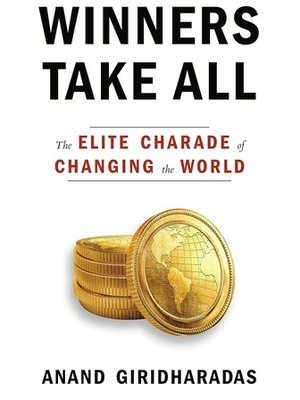
In Winners Take All, Anand Giridharadas challenges the idea that the ultra-rich can fix social problems without giving up any power or privilege. He calls out what he names MarketWorld, a global network of elites who use conferences, foundations, and social enterprises to appear generous while keeping the status quo intact. I like this book because it asks a simple, uncomfortable question: "Can the people who caused the problem really be trusted to solve it?"
Giridharadas argues that most elite-led social change is designed to be win-win, meaning it never threatens the wealth, power, or comfort of the people at the top. Instead of real reform like higher taxes, stronger labor rights, or regulated industries, we get charitable donations, innovation summits, and feel-good stories. Throughout this page, I'll show you how to spot these patterns in your own world and think more critically about who really benefits from different kinds of change.
My Take: The "Real Change vs. Change Theater" Checklist
Most summaries just explain Giridharadas's critique and call it a day. I wanted this page to feel more like a change-making reality check you can use in real life. As you read, I'll keep asking you to notice the difference between solutions that sound good and solutions that actually shift power and resources.
I treat this book like a decoder ring for philanthropic PR and corporate goodwashing. When I hear about a new initiative or program, I pause and ask, "Does this threaten the power structure, or does it leave it untouched?" If a billionaire's foundation is solving a problem that billionaires helped create, I get suspicious. You can use this same lens to evaluate the change-making stories you see in the news, at work, or in your community.
Key Takeaways
MarketWorld and Win-Win Solutions
For me, the core idea is MarketWorld, Giridharadas's term for the elite ecosystem that promises to change the world without upsetting anyone powerful. These solutions are always win-win, meaning they never ask the wealthy to sacrifice anything real. True change often requires someone losing power or money, but MarketWorld refuses to admit that trade-off exists.
Generosity as a Substitute for Justice
The book helped me see that charity is not the same as justice. When the wealthy donate money, they get to control how it's used and who benefits, often without changing the rules that made them rich in the first place. Justice would mean changing laws, raising wages, or paying higher taxes, none of which lets billionaires stay in charge.
Thought Leaders and the Idea Industry
Giridharadas exposes the thought leader economy where consultants, speakers, and influencers get paid to package social problems in business-friendly language. These experts rarely challenge the systems their wealthy clients control. Instead, they offer safe, marketable ideas that feel innovative without threatening profits or power.
The Limits of Doing Well by Doing Good
The hopeful message of "doing well by doing good" sounds great until you realize it only works for problems that are also profitable to solve. If a solution threatens corporate profits, MarketWorld loses interest. Real change often requires sacrifice, regulation, or redistribution, none of which fit the win-win model that elites prefer.
Private Change-Making Replaces Public Power
I find it troubling that more and more social problems are being handed over to private foundations and corporate programs instead of being solved through democratic government. When billionaires control the solutions, regular people lose their voice, and change happens only when it's convenient for the wealthy.
Chapter-by-Chapter Summary (Short & Simple)
Chapter 1: But I Was Trying to Change the World
Giridharadas opens with a story about a young idealist who goes to work for a consulting firm that promises to help solve poverty while also making money. She slowly realizes that the firm's real job is to protect its corporate clients, not challenge them. This chapter sets up the central tension: can you really change a system while profiting from it?
Chapter 2: Win-Win
Here, Giridharadas introduces the idea of win-win solutions and explains why they're often a trap. Real social change usually means someone has to lose, whether that's a corporation losing profits or the wealthy paying higher taxes. MarketWorld insists that everyone can win, which means nothing truly threatening ever gets proposed or funded.
Chapter 3: Rebel-Kings in Worrisome Berets
This chapter looks at how elites style themselves as rebels and disruptors even though they're defending the system that made them rich. Giridharadas shows how conferences like TED and events like Davos let powerful people feel progressive without actually giving up any power. The rebellion is all aesthetic, no substance.
Chapter 4: The Critic and His Crowd
Giridharadas profiles people who work inside MarketWorld but start to feel uneasy about the contradictions. Some critics push back gently, asking for slightly better behavior from elites, but they rarely call for systemic change. The chapter explores why it's so hard to critique a system when your paycheck depends on it.
Chapter 5: Arsonists Make the Best Firefighters
This is one of my favorite chapters because it tackles the absurdity of asking the people who caused a problem to fix it. Giridharadas argues that the same corporations and billionaires who lobbied for deregulation, tax cuts, and weak labor laws now present themselves as the solution. It's like hiring an arsonist to run the fire department.
Chapter 6: Generosity and Justice
Here, Giridharadas draws a sharp line between generosity and justice. Generosity lets the wealthy stay in control and feel good about themselves, while justice redistributes power and resources more fairly. He argues that we've replaced justice with private charity, which means the wealthy still get to decide who deserves help and who doesn't.
Conclusion: "Other People Are Not Your Children"
In the conclusion, Giridharadas challenges readers to rethink how change happens. He argues that real change comes from public institutions, democratic movements, and laws, not from the kindness of billionaires. The title of this section reminds us that when the elite treat social problems like charity cases, they deny regular people the power to shape their own lives.
Main Concepts
MarketWorld and Its Rules
Once I learned about MarketWorld, I started seeing it everywhere. It's the network of conferences, foundations, consulting firms, and thought leaders who all agree that business thinking is the best way to solve social problems. The rules of MarketWorld are simple: change must be profitable or at least not threaten profits, solutions must be scalable and innovative, and no one can talk about power, politics, or who really caused the problem in the first place.
MarketWorld Change
- Win-win solutions that protect the powerful
- Private charity and philanthropy
- Voluntary corporate programs
- Innovation and entrepreneurship
- Thought leaders and TED Talks
- Avoiding politics and government
Justice-Based Change
- Trade-offs that shift power and wealth
- Public programs and taxes
- Laws and regulations
- Democratic movements and organizing
- Community voices and advocates
- Using government to enforce fairness
The Protocol of MarketWorld
Giridharadas describes a set of unwritten rules, a protocol, that governs how people in MarketWorld talk and act. You can't blame specific people or industries for causing harm, you can't propose solutions that reduce anyone's profits, and you must frame everything as an opportunity rather than a problem. I've noticed this protocol at work in corporate social responsibility reports, impact investing pitch decks, and even some nonprofit mission statements.
Thought Leaders and the Idea Cartel
The book opened my eyes to how the thought leader economy works. Consultants, speakers, and writers make their living by packaging ideas in ways that sound bold but never threaten their wealthy clients. The result is an idea cartel where only certain kinds of change are considered serious or practical, and anything that challenges elite power gets dismissed as unrealistic or divisive.
How to Apply the Ideas This Week
I don't want this to just be a cynical takedown you read and forget. Here are a few small, practical ways I use Giridharadas's ideas to think more critically about change-making in my own life. You can try them this week and see what shifts for you.
- Run a "who benefits?" audit. Pick one initiative, campaign, or program you've heard about recently, whether at work, in the news, or in your community. Ask, "Who benefits most from this solution, and who holds the power when it's done?"
- Notice the language of win-win. Pay attention this week when someone promises a solution that helps everyone with no trade-offs. Ask yourself, "Is this really win-win, or is it just convenient for the people in charge?"
- Look for change theater. Find one example of a company or wealthy person getting praise for a charitable act or program. Then ask, "Does this change the rules, or does it just look good while leaving the system untouched?"
- Compare generosity and justice. Think about one social issue you care about. Write down what a generous response looks like (a donation, a program, a scholarship) and what a just response looks like (a new law, a tax, a regulation). Notice the difference in who stays in control.
Memorable Quotes
"The winners of our age must be challenged to do more good, but also less harm."
"When elites put themselves in the vanguard of social change, they are able to reshape what social change looks like."
"What if doing good is not always a substitute for the reforms powerful people resist?"
"The more I learned about the giving of the age, the less it seemed designed to change the world."
Who I Think Should Read This Book
- Nonprofit workers and social entrepreneurs: If you work in the social impact space, this book will help you see the contradictions and compromises you might be navigating without realizing it.
- Students and young professionals: If you're trying to "do good" with your career but feel uneasy about corporate solutions to social problems, this book names what you're feeling.
- Business leaders and executives: If you run a company and want to do more than just good PR, this book challenges you to think about real accountability and systemic change.
- Political and community organizers: If you're fighting for justice through democratic movements, this book validates your work and helps you explain why private charity isn't enough.
- Anyone skeptical of billionaire philanthropy: If you've ever wondered why the world seems to get worse even as the wealthy give more away, this book explains the structural reasons behind that pattern.
What Other Readers Are Saying
I always like to see what other readers think before I commit to a book. On Goodreads, Winners Take All holds around 4.1 out of 5 stars from over 17,000 ratings, which is strong for a political nonfiction book. Many readers say it changed how they think about philanthropy and made them question corporate social responsibility programs they used to trust.
On Amazon, the book has around 4.5 out of 5 stars, and reviews often call it "eye-opening," "uncomfortable but necessary," and "a must-read for anyone working in social impact." Some critics feel Giridharadas doesn't offer enough practical alternatives, but even those readers often say the book asks important questions they hadn't considered before.
-
Read reviews on Amazon:
Winners Take All: The Elite Charade of Changing the World on Amazon
* Affiliate link. I earn from qualifying purchases.
- Read reviews on Goodreads: Winners Take All on Goodreads
Final Thoughts
For me, the biggest gift of Winners Take All is that it gives me a language for the discomfort I've felt watching billionaires get praised for solving problems they helped create. Instead of asking, "How can I get a seat at the table with the powerful?" I can now ask, "Who controls the table, and what kind of change does that table allow?" That one shift makes me more skeptical of win-win promises and more interested in justice-based movements.
If you use this summary as a decoder ring, a way to spot real change versus change theater, you'll walk away with more than just notes about an important book. You'll have a few simple questions you can ask the next time someone promises to save the world without asking the powerful to give up anything real. That's the heart of Giridharadas's argument: real change requires real sacrifice, and we shouldn't settle for anything less.

Ready to Question Elite Solutions?
If this summary helped you, the full book is worth reading slowly, with a pen in your hand and your own experiences in mind. You can use it as a guide to think more critically about who really benefits from different kinds of change.
Get Winners Take All on Amazon* Affiliate link. I earn from qualifying purchases.